Custom CRM Development.
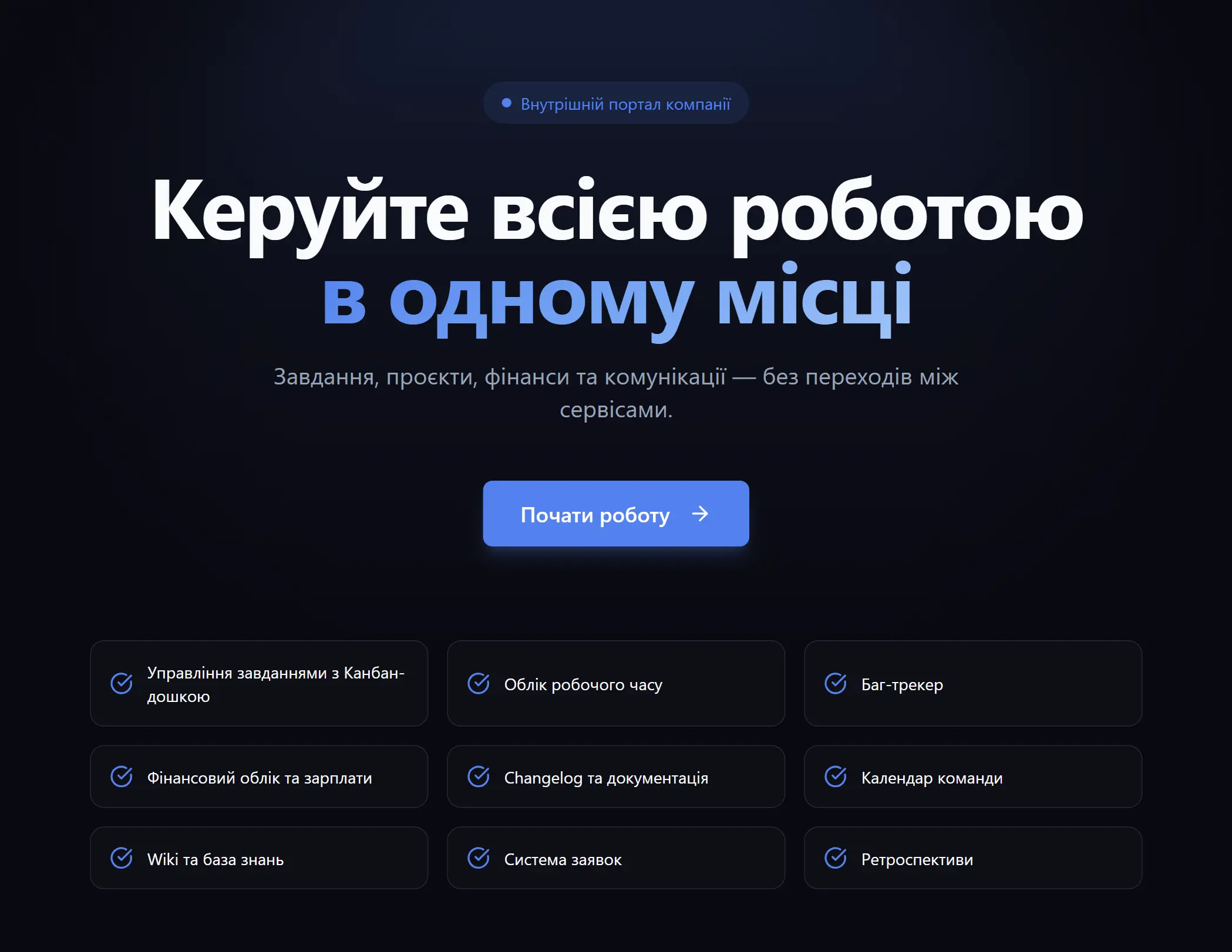
We build custom CRMs and internal platforms when off-the-shelf tools stop fitting the process: sales and client pipelines, project and delivery tracking, HR and recruiting flows, finance and reporting, all in one modular system with real-time updates across the team. Steppe Dev Box, our own modular CRM, is built this way and runs our company.
Discuss your productWho this is for.
- 01
Companies paying for several SaaS tools and still gluing them together with spreadsheets
- 02
Service businesses whose process differs enough from standard CRMs that configuration no longer works
- 03
Teams that need real-time collaboration, strict access control or integrations their vendor does not offer
What's included
- 01
Process mapping and a module plan: which entities, states and views your team actually uses
- 02
Modular architecture so new domains (HR, finance, support) plug in without rewrites
- 03
Real-time boards, lists and dashboards synced over WebSockets
- 04
Role-based access, audit log and configurable workflows
- 05
Integrations: email, calendar, messaging, accounting, telephony, your product's API
- 06
Reporting and exports with scheduled digests
- 07
Import and migration from your current CRM or spreadsheets
- 08
Admin tooling for custom fields, pipelines and automation rules
How we build it.
A CRM is a set of modules over a shared core: identity, permissions, events, search and notifications. We build the core once and then add modules as independent packages with their own schema and UI, which keeps the system understandable as it grows. Changes are broadcast as events, so every board stays in sync without polling, and every change is attributable to a user and a time.
- 01
Shared core (auth, permissions, events, search) with modules as independent packages
- 02
Event-driven updates over WebSockets with optimistic UI and conflict handling
- 03
Configurable fields and pipelines stored as data, not code
- 04
Next.js and TypeScript front end, PostgreSQL as the system of record
Scope, timeline and budget.
Ranges are based on recent projects. After a discovery call we send a fixed estimate for the first milestone.
Core + first module
- Timeline
- 10–14 weeks
- Budget
- from 40k USD
Core platform, one business module (for example sales pipeline), migration of existing data, rollout to the team.
Company platform
- Timeline
- 5–8 months
- Budget
- 90–200k USD
Several modules, integrations, reporting, automation, mobile-friendly UI, training and handover.
Ongoing development
- Timeline
- ongoing
- Budget
- monthly
A small team evolving the platform with your process: new modules, integrations and improvements.
Frequently asked questions.
01Why build a CRM instead of configuring Salesforce or HubSpot?
If your process fits a standard CRM, configure one. Custom makes sense when you pay for several tools, your workflow needs real-time collaboration or non-standard entities, or per-seat pricing has outgrown the cost of owning the system. We will tell you honestly which case you are in.
02How long until the team can use it?
The core and the first module typically go live in 10–14 weeks, including migration from your current tool. Further modules follow in increments of a few weeks each.
03Can it integrate with the tools we keep?
Yes. Email, calendar, messaging, accounting, telephony and your own product APIs are the usual integrations. Anything with an API can be connected.
04Who maintains it afterwards?
Either your team, with documentation and handover, or ours under a support agreement. The code and infrastructure are yours in both cases.
Blog.
Planning something like this?
Tell us what you want to launch and when. An engineer will reply within 24 hours with questions, a draft scope and a realistic estimate.